If you’re planning a drywall project, one detail that often gets overlooked is the level of
finish. Not all drywall is finished the same way—and choosing the right level can make a big
difference in the final appearance of your walls and ceilings.
From basic unfinished boards to perfectly smooth, paint-ready surfaces, drywall finishing is
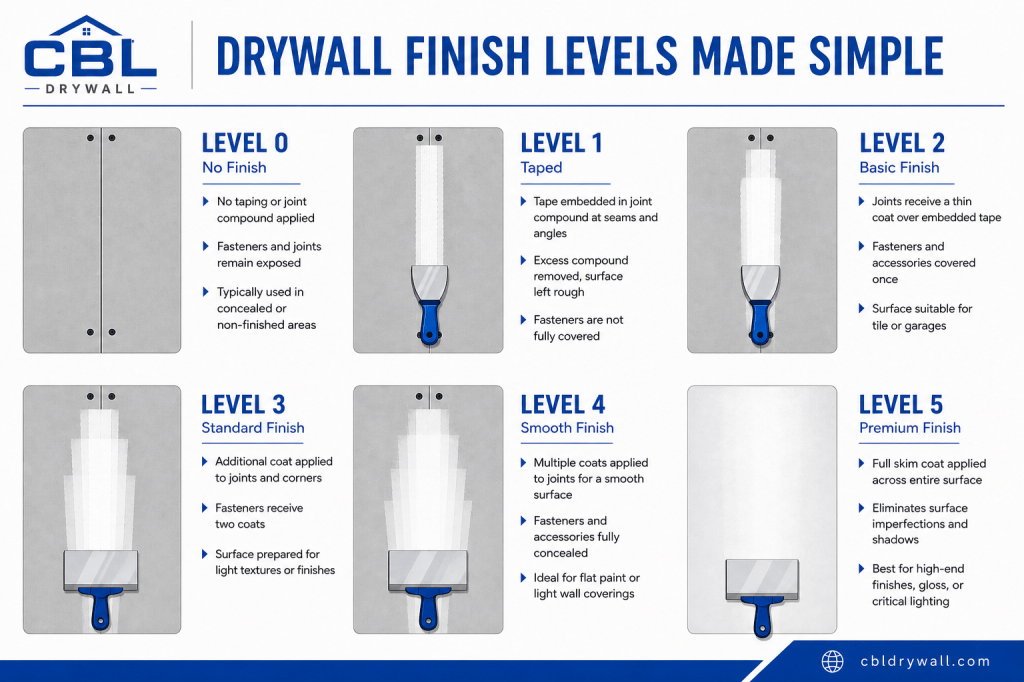
categorized into six levels: Level 0 through Level 5. Here’s what each level means and when
you should use it.
Level 0: No Finish
Level 0 means the drywall is installed but no taping, mudding, or finishing has been done.
Where it’s used:
- Temporary construction
- Areas not open to public view
- Projects still in early stages
Level 1: Basic Fire Taping
Level 1 includes a single layer of joint compound over taped seams, but no additional
smoothing or sanding.
Where it’s used:
- Mechanical rooms
- Attics or service areas
- Spaces hidden from view
Level 2: Utility Finish
At Level 2, joints are taped and covered with a thin coat of compound, and fasteners are
lightly covered.
Where it’s used:
- Garages
- Warehouses
- Areas where appearance isn’t a priority
Level 3: Paint-Ready for Heavy Textures
Level 3 includes additional coats of compound, creating a smoother surface—but not
perfectly smooth.
Where it’s used:
- Walls that will receive heavy texture (like knockdown or orange peel)
- Some commercial spaces
Level 4: Standard Residential Finish
Level 4 is the most common finish for homes. It includes multiple coats of compound,
sanding, and a smooth surface ready for paint.
Where it’s used:
- Living rooms, bedrooms, and hallways
- Most residential walls and ceilings
- Areas with flat or low-sheen paint
Level 5: High-End, Smooth Finish
Level 5 is the highest level of drywall finishing. It includes everything in Level 4 plus a thin
skim coat over the entire surface.
Where it’s used:
- High-end homes
- Areas with bright lighting or large windows
- Walls painted with glossy or dark finishes
Why Choosing the Right Level Matters
Not every project needs a Level 5 finish—and choosing a higher level than necessary can
increase costs without adding value.
Key factors to consider:
- Lighting conditions (natural light highlights imperfections)
- Paint type (glossy paints show more flaws)
- Budget
- Purpose of the space
Quick Comparison
- Level 0–2: Functional, not decorative
- Level 3: Suitable for textured finishes
- Level 4: Standard for most homes
- Level 5: Best for high-end, perfectly smooth results
Final Thoughts
Understanding drywall finish levels helps you set the right expectations for your project.
Whether you’re finishing a garage or creating a high-end living space, choosing the
appropriate level ensures you get the best balance of cost, durability, and appearance.
If you’re unsure which level is right for your project, a professional drywall contractor can
guide you based on your space, lighting, and final design goals—making sure your walls
look exactly how you want them to.


Leave a comment